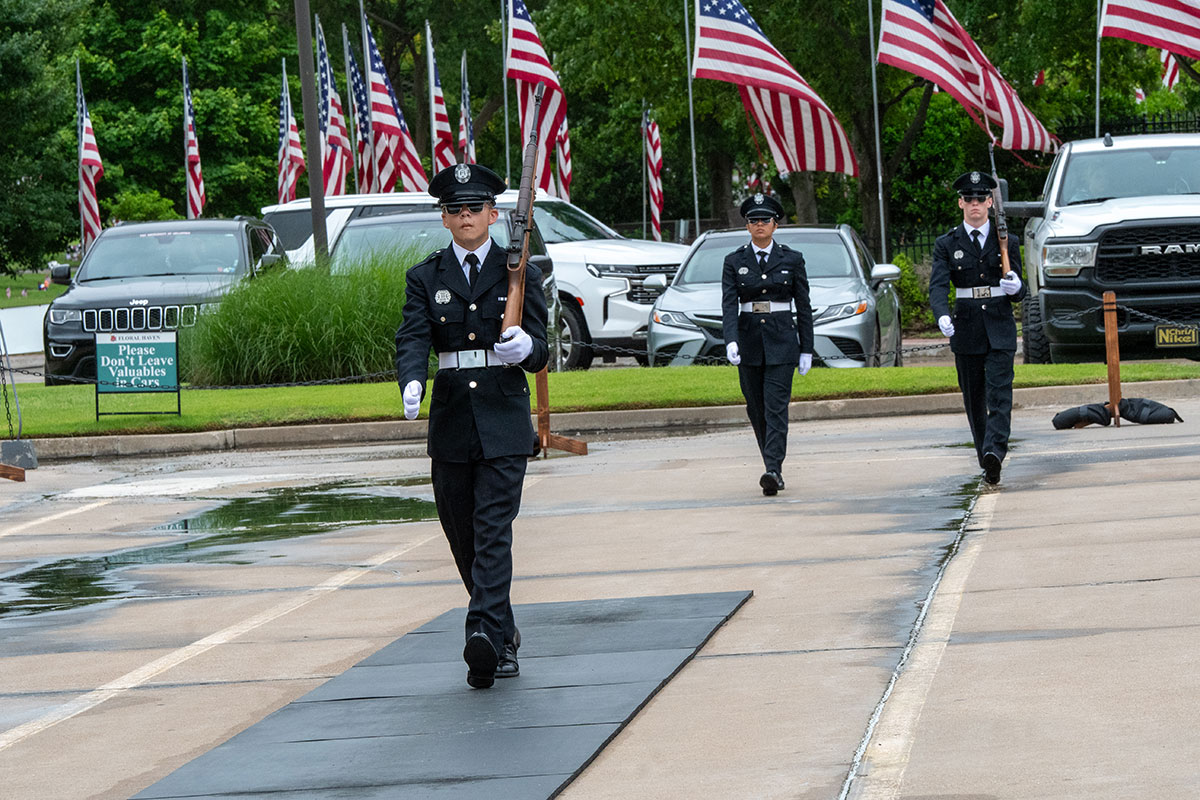
The visible standard. Dress jacket, trousers, belt, cover, shoes, gloves — every detail held to the same measure.
Our uniforms are intentionally different from standard military uniforms.
The program began as a Civil Air Patrol activity, and in those early years its members wore Air Force uniforms — Civil Air Patrol being the Air Force auxiliary. Youth on Guard is now an independent organization, and the uniform it wears is its own: a respectable, military-like appearance that implies no branch affiliation and carries no risk of misrepresenting military service. It allows the Sentinels to honor the Unknowns simply, without drawing attention to themselves.
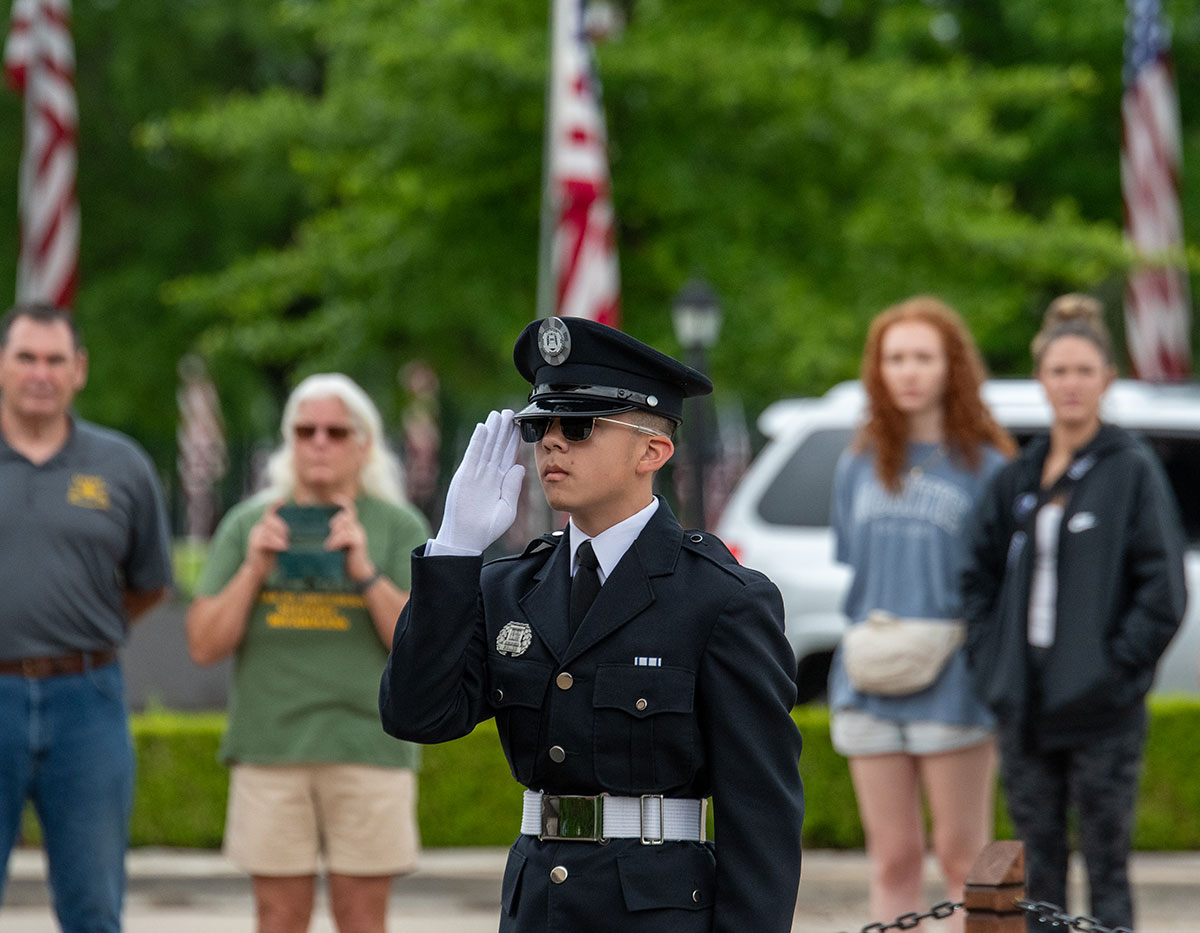
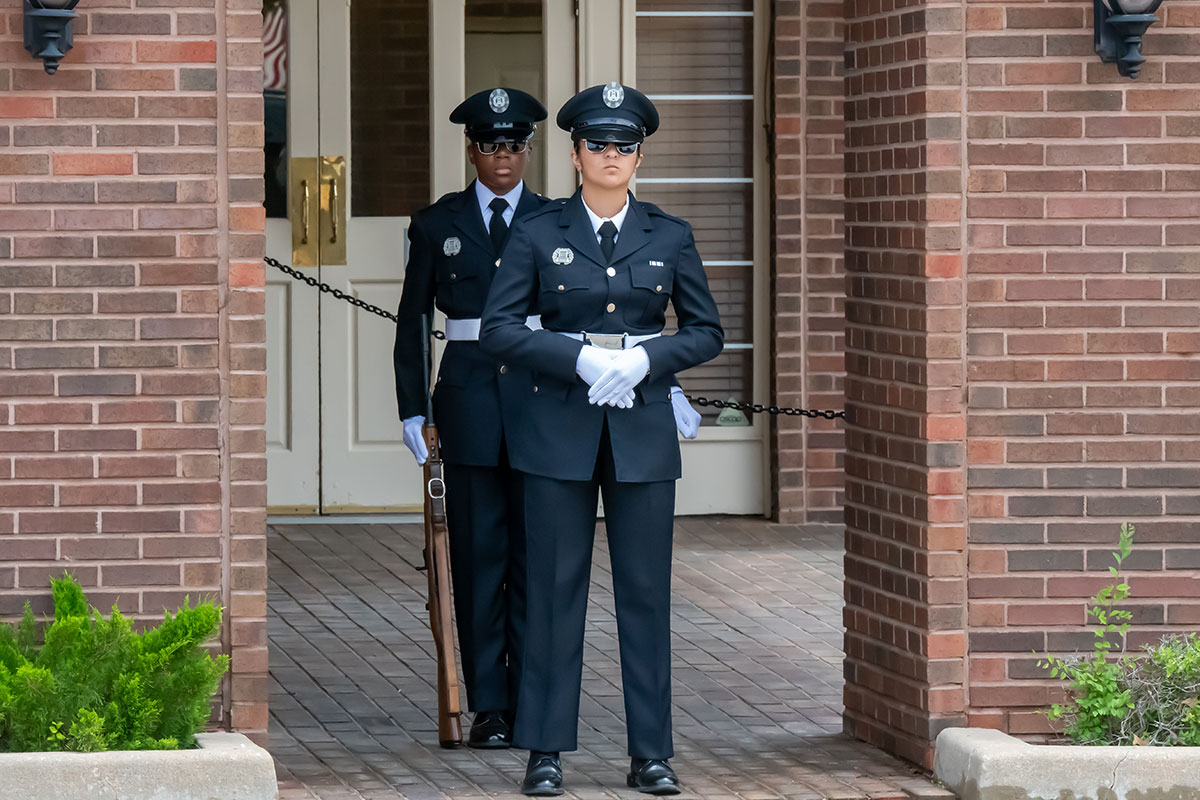
The uniform that was ultimately selected is dark blue, built around a traditional four-pocket service coat — similar to those worn by every branch of service at some point, but a copy of none. Everything worn with it, down to the white gloves and white pistol belt, is plain by intention: chosen to honor the Unknowns, never to draw the eye.
Dark blue and four-pocket — traditional in cut, yet a copy of no single branch of service.
Long-sleeved and white, worn beneath the service coat.
Black, and hand-tied for every post.
The traditional “bus driver” service cap, squared above the brow.
Leather, hand-shined to a deep and even gloss.
White, worn over the service coat.
White, worn at every post.
Worn as needed, shielding the Sentinel’s vision from the sun.
Our uniforms are intentionally simple, without insignia or rank. This practice, inspired by the Sentinels at Arlington National Cemetery, honors the Unknowns just as the Unknowns’ identities and military ranks remain unknown, our Sentinels have no rank.
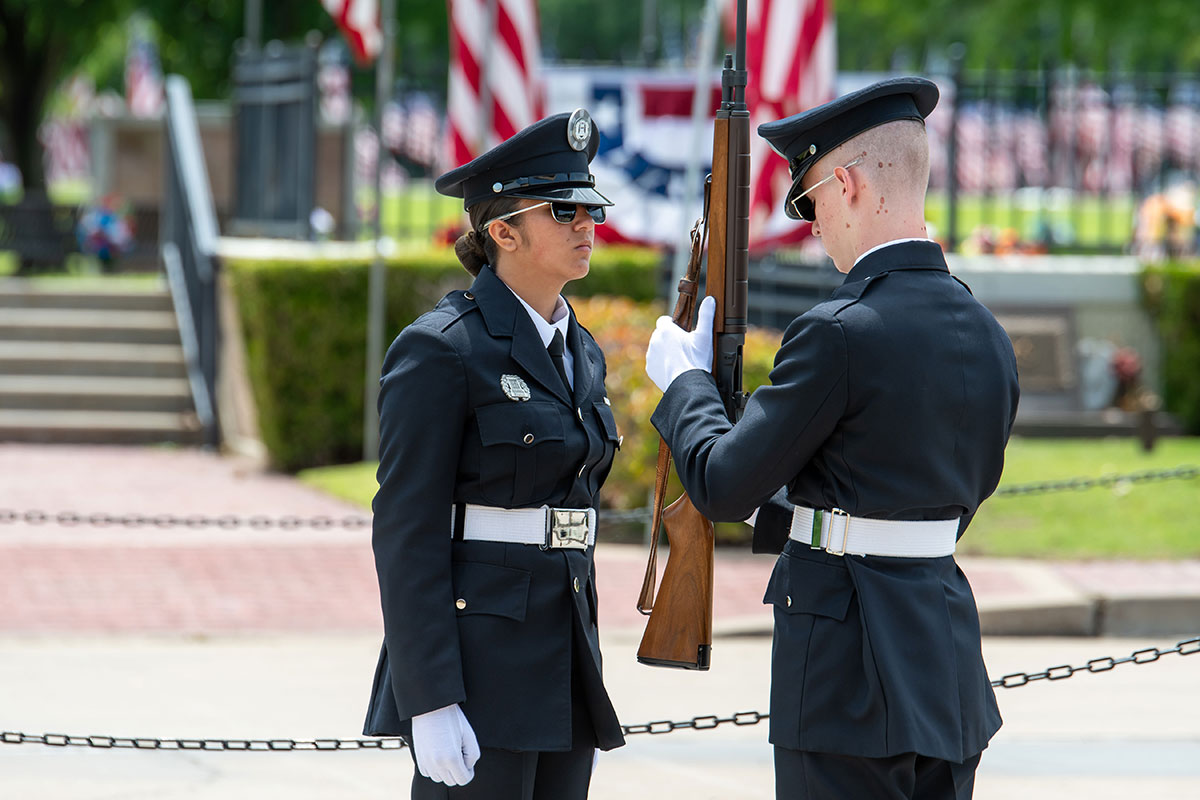
Uniform accessories are limited to achievements as a Sentinel, including qualification ribbons (one blue stripe for Sentinel, three for Sergeant of the Guard) and an unnumbered replica of the Tomb Guard Badge.
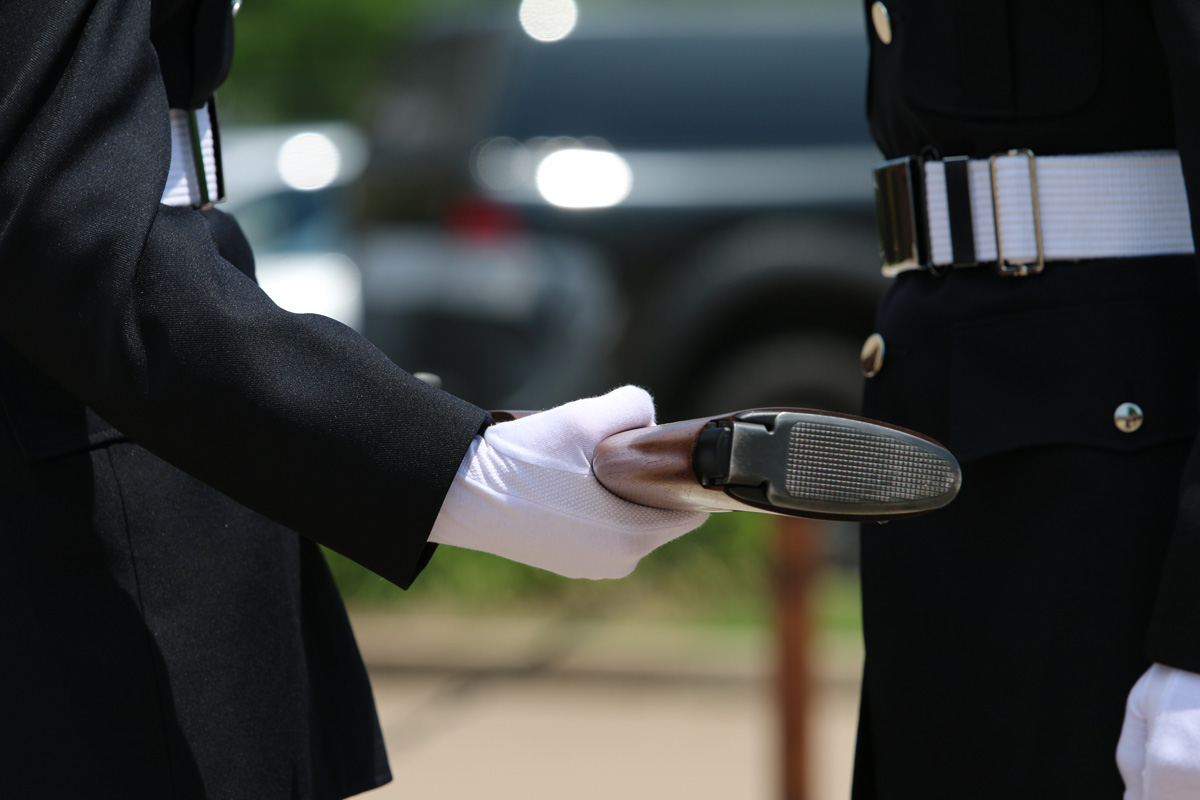
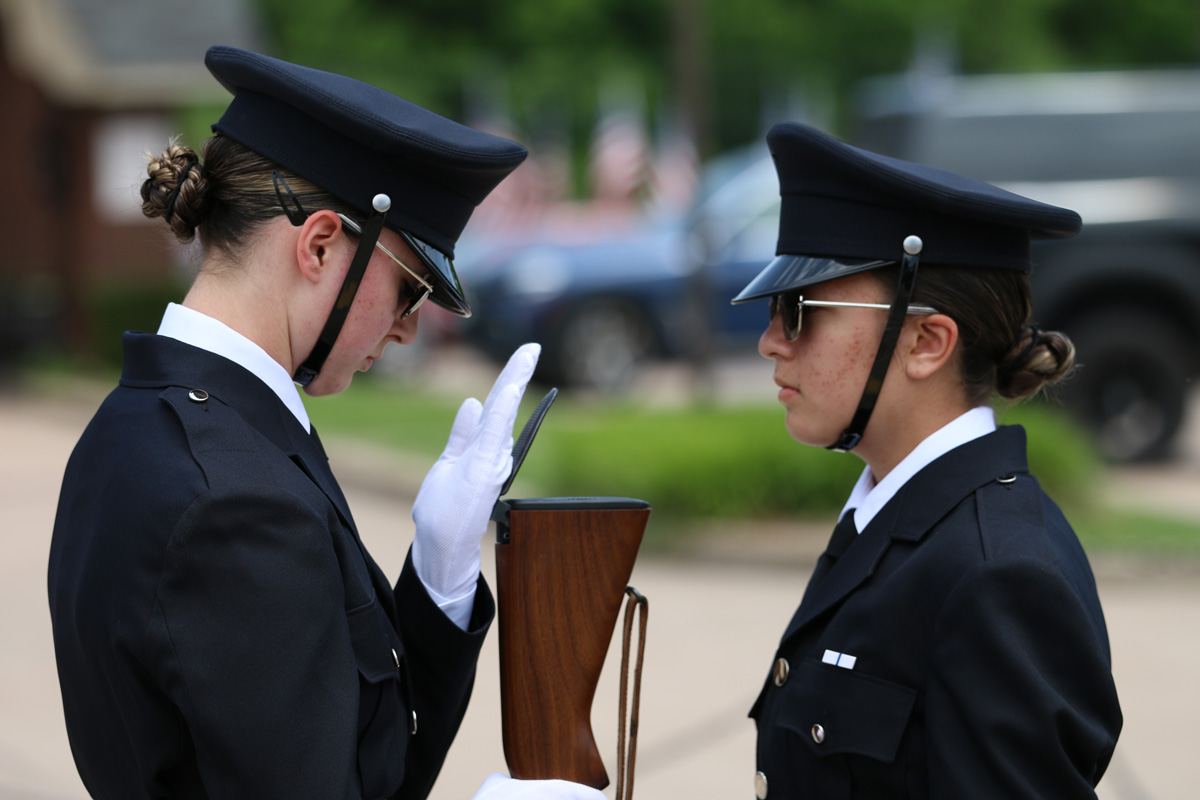
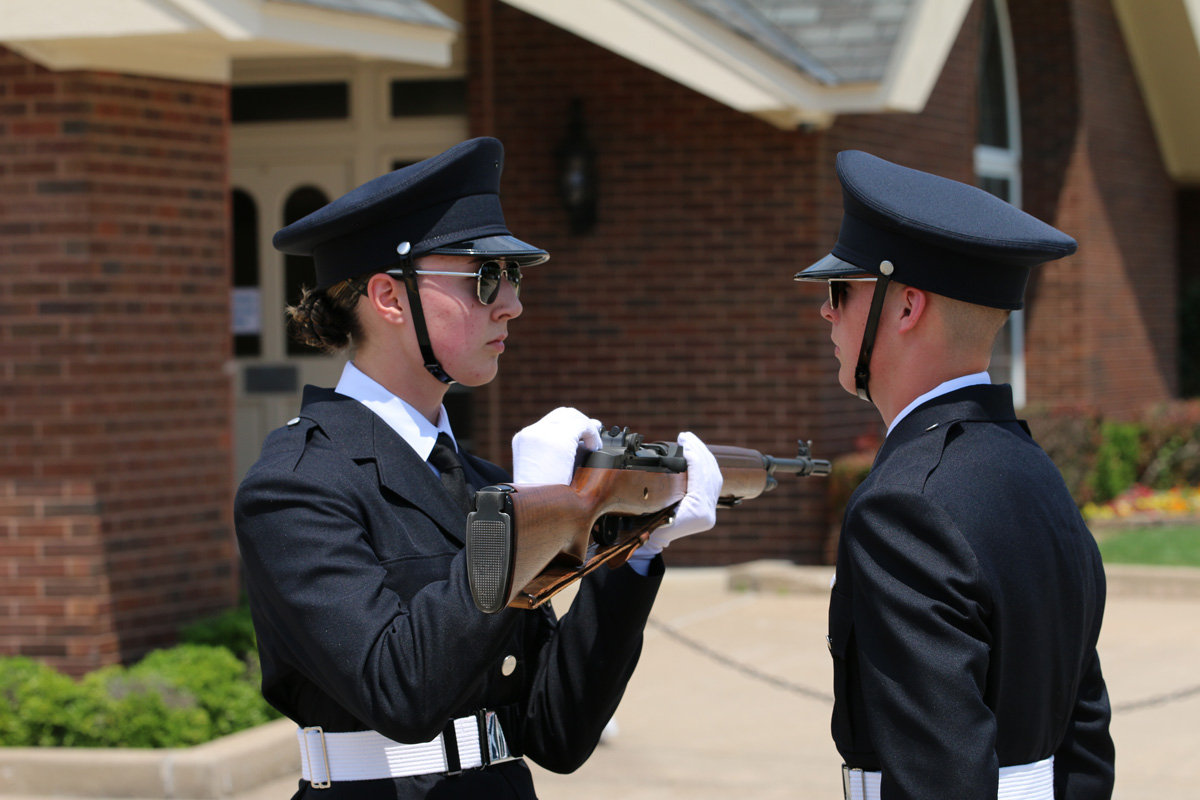
Before each post, the Sergeant inspects the next Sentinel. The check is wordless. The rifle inspected. A glance at the gigline, a check of the cap, ribbons, shoes, and jacket.
The standard is not for the visitor. The standard is for the Sentinel — and for the Unknown Soldier they stand for.
Read about the training →
We would love the chance to discuss our program with you.